Home / IVF analyses
Two questions decide whether a transfer works.
Is the embryo chromosomally normal, and is the endometrium ready to receive it? We answer the first with preimplantation genetic testing and the second with endometrial analyses. Both are run in our own laboratory in Skopje, for reproductive centres and the patients they refer.
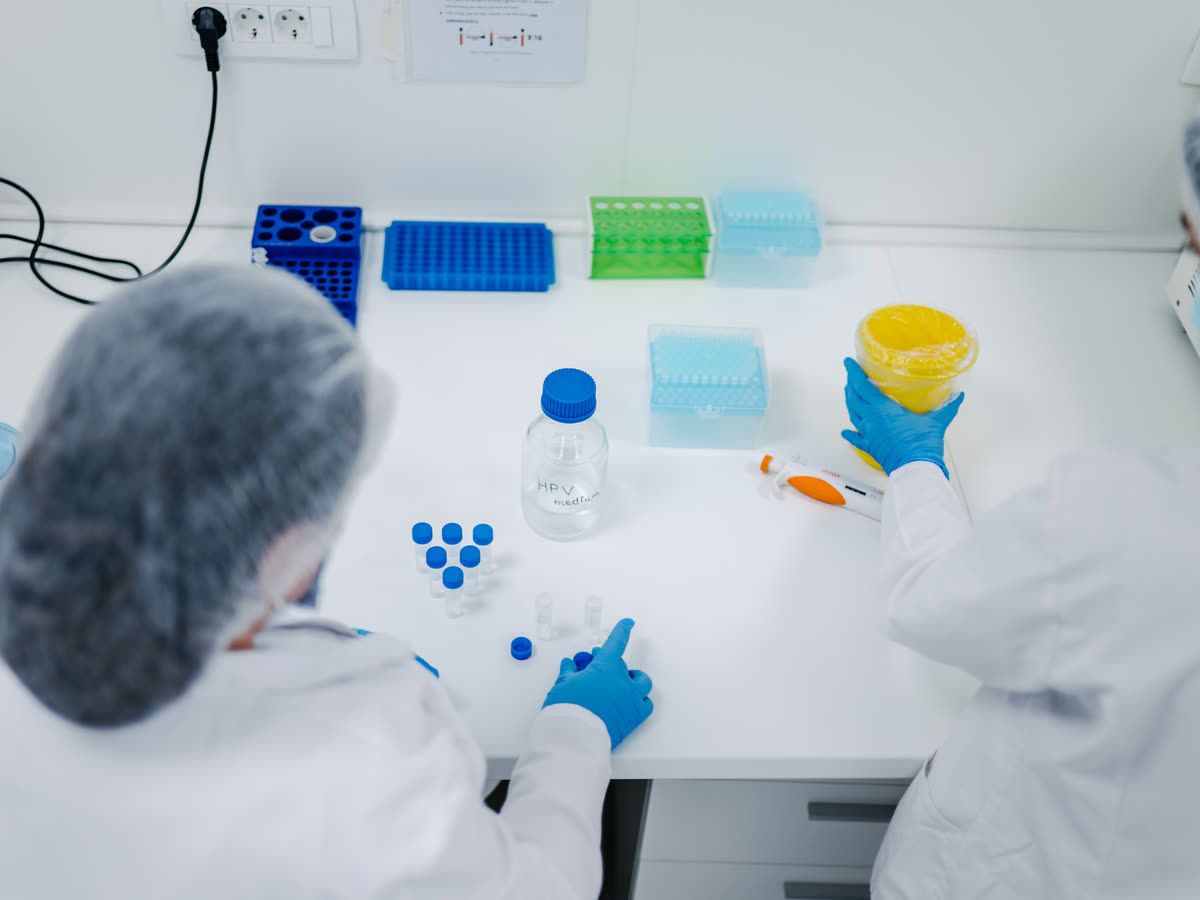 Our laboratory, Skopje
Embryo testing: choosing which embryo to transfer
Most embryos that fail to implant, or that end in early miscarriage, are chromosomally abnormal. Preimplantation genetic testing reads a few cells from each blastocyst before transfer, so the clinic can transfer the embryo most likely to become a healthy pregnancy, and avoid transferring ones that cannot. The biopsy is done by the embryologist at the clinic; we do the sequencing and the interpretation.
Five to eight cells, taken from the part that becomes the placenta
On day 5 or 6 the embryo is a blastocyst: a fluid-filled sphere with two distinct parts. The inner cell mass becomes the baby. The outer layer, the trophectoderm, becomes the placenta. The biopsy takes cells only from that outer layer.
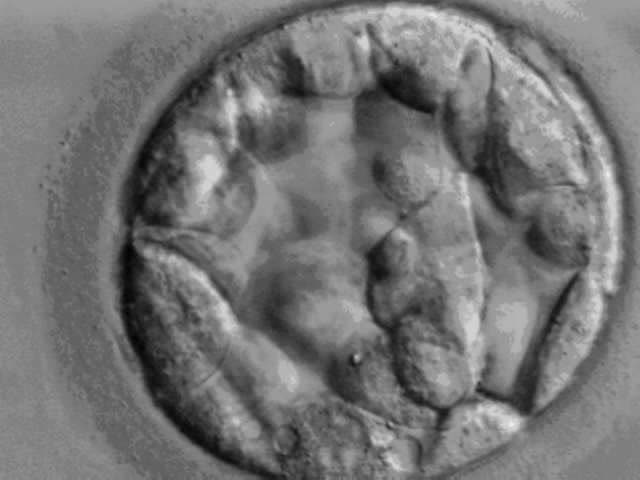
The embryos are vitrified while the analysis runs, and the chosen one is thawed for transfer in a later cycle. Biopsy technique and timing are the embryologist's; we supply the tubes and the protocol.
Counting the chromosomes in each embryo
An embryo with the wrong number of chromosomes usually fails to implant, or miscarries, or in a few cases results in a child with a chromosomal condition. PGT-A counts all 24 chromosomes in each blastocyst, so the clinic can rank embryos by the one factor that most often decides the outcome.
Aneuploidy rises steeply with maternal age, which is why the benefit is largest in older patients and in couples who have had repeated losses. It does not make a poor embryo good: it identifies which of the embryos already available are worth transferring.
- What it readsThe copy number of all 24 chromosomes, plus segmental gains and losses and an indication of mosaicism.
- Who it is forAdvanced maternal age, recurrent pregnancy loss, repeated implantation failure, severe male factor, and single embryo transfer policies.
- SampleTrophectoderm biopsy, 5 to 8 cells per blastocyst, in the tube we supply.
- ReportPer embryo: euploid, aneuploid or mosaic, with the chromosomes involved, sent to the referring centre.
When a parent carries a balanced rearrangement
A balanced translocation or inversion leaves the carrier perfectly healthy: nothing is gained or lost, the pieces are simply rearranged. But when that chromosome pairs up during egg or sperm formation, many of the resulting embryos end up with a piece missing or doubled. That is a common hidden cause of repeated miscarriage.
PGT-SR is designed around the family's specific rearrangement, so it can tell an unbalanced embryo from a balanced or normal one. Couples usually arrive here after a karyotype has already found the translocation, often following several losses.
- What it readsImbalances arising from the known rearrangement, down to the segment sizes the method resolves, alongside whole-chromosome counts.
- Who it is forCouples where one partner carries a balanced translocation, a Robertsonian translocation or an inversion.
- SampleTrophectoderm biopsy, and the parental karyotype or report describing the rearrangement.
- ReportPer embryo: balanced or normal, or unbalanced with the segments involved.
A named inherited condition, and everything else as well
When a couple is at risk of passing on a specific monogenic condition, such as cystic fibrosis, spinal muscular atrophy, thalassaemia or a hereditary cancer syndrome, PGT-M tests each embryo for that exact variant and identifies the embryos that are unaffected.
Our PGT-M is the complete analysis: the monogenic result comes together with the aneuploidy and structural rearrangement analysis, so one biopsy answers all three questions at once. It needs a preparation step before the IVF cycle starts, because the test is built around the family's own variant.
- What it readsThe family's specific disease-causing variant, plus the full PGT-A and PGT-SR analysis in the same run.
- Who it is forCouples who both carry the same recessive condition, a carrier of a dominant condition, or a family with a known pathogenic variant.
- Before the cycleA setup study on DNA from both partners, and usually an affected or carrier relative, to make the family's variant traceable in an embryo.
- ReportPer embryo: affected, carrier or unaffected for the condition, with the chromosome findings alongside.
Endometrium: whether the lining is ready, and healthy
A chromosomally normal embryo still needs a receptive lining on the right day. When good embryos keep failing to implant, the question moves from the embryo to the endometrium: is the implantation window where we assume it is, is the bacterial balance right, and is there a silent inflammation. Three analyses answer those, and all three can run from a single endometrial biopsy.
Endometrial receptivity: finding the right day
The endometrium is receptive for a window of roughly two days in each cycle. Transfer outside it and even a perfect embryo will not implant. In a meaningful share of women that window sits earlier or later than the standard transfer day, and in women with repeated implantation failure it is displaced more often still.
- What it readsThe expression of implantation-related genes in the lining, which dates the endometrium against the receptive window.
- Who it is forMostly after one or more unsuccessful transfers of good embryos.
- SampleAn endometrial biopsy taken by the IVF doctor on a precisely timed day of a mock cycle.
- ReportReceptive, or displaced with the recommended shift, so the next transfer is scheduled to the patient's own window.
The bacterial balance of the lining
The endometrium is not sterile. It carries its own bacterial community, and in a favourable one lactobacilli dominate heavily. When they do not, implantation and ongoing pregnancy rates are reported to be lower. Ginebiom sequences the bacteria present and reports the balance between them.
The point of measuring it is that it can be acted on: a dysbiotic result is usually managed with targeted treatment and probiotics before the next transfer, rather than simply transferring again and hoping.
- What it readsThe bacterial community of the endometrium by sequencing bacterial ribosomal RNA genes, reported as proportions.
- Who it is forRepeated implantation failure, recurrent loss, or alongside ERT when the lining is being investigated.
- SampleThe same endometrial biopsy used for ERT, so one procedure can serve both.
- ReportThe proportion of lactobacilli and the other species present, with whether the profile is favourable.
Looking for a silent inflammation
Chronic endometritis is a low-grade, persistent inflammation of the lining caused by bacteria. It usually produces no symptoms at all, which is why it goes unnoticed, and it is found disproportionately often in women with repeated implantation failure or recurrent miscarriage. It also responds to a course of the right antibiotic.
Endobiom looks specifically for the organisms that cause it, rather than describing the community as a whole. Ginebiom asks whether the balance is right; Endobiom asks whether a known troublemaker is present.
- What it readsThe bacteria most often responsible for chronic endometritis, including enterococci, enterobacteria, streptococci, staphylococci, mycoplasma, ureaplasma, chlamydia and neisseria.
- Who it is forRepeated implantation failure or recurrent pregnancy loss, especially where no other cause has been found.
- SampleThe same endometrial biopsy, so it can be combined with Ginebiom and ERT.
- ReportWhich pathogens were detected and at what level, so treatment can be targeted rather than empirical.
Two routes, depending on the sample
Embryo testing is arranged entirely between the laboratory and the clinic. Endometrial testing starts with the IVF doctor, but the patient can deal with us directly for the result if they prefer.
Embryo testing
Clinic to laboratory, via the embryologist
- The centre contacts us and we agree the analysis, the timing and the paperwork.
- We send the sampling materials and the protocol to the clinic.
- The embryologist performs the trophectoderm biopsy and prepares the tubes; the embryos are vitrified.
- The samples reach us and are sequenced and interpreted in Skopje.
- The report goes back to the referring centre, which discusses it with the couple and selects the embryo to transfer.
Endometrium testing
Through the IVF doctor, with the patient involved
- The IVF doctor decides which analyses are needed and on which day of the cycle to sample.
- The doctor takes the endometrial biopsy. The timing matters, particularly for ERT.
- The sample reaches us through the clinic, or the patient brings it in.
- We analyse it; one biopsy can serve ERT, Ginebiom and Endobiom together.
- The result can be explained here by our geneticist, or taken to the IVF doctor to plan the next transfer. Many patients do both.
Turnaround, sample transport and pricing are agreed per referral. Contact the laboratory before the cycle starts, especially for PGT-M, which needs a preparation step.
Common questions
Answers are general and educational. Panels, resolution, turnaround and prices are confirmed by the laboratory on enquiry.
Does the biopsy harm the embryo?
The cells are taken from the trophectoderm, the outer layer that becomes the placenta, not from the inner cell mass that becomes the baby. It is a routine step in modern IVF laboratories, performed by the embryologist on a day 5 or day 6 blastocyst.
Can a patient order these directly?
Embryo testing, no: it is arranged with the IVF centre, because the sample can only be taken in the embryology laboratory. Endometrial testing starts with the IVF doctor taking the biopsy, but from there the patient can deal with us directly, including having the result explained here.
What does PGT-M include?
The family's specific monogenic condition, and in our laboratory the aneuploidy and structural rearrangement analysis as well, from the same biopsy. It requires a setup study before the cycle, using DNA from both partners and usually a relative, so the variant can be traced in an embryo.
Does PGT-A guarantee a pregnancy?
No. It identifies which of the available embryos are chromosomally normal, which removes one common cause of failure. Implantation still depends on the endometrium, and on factors no test currently measures.
What is a mosaic embryo?
One where some cells are normal and some are not. Mosaic results are reported rather than hidden, and the decision about whether to transfer is taken by the clinic with the couple, since outcomes vary with which chromosomes are involved.
Can the three endometrial analyses run from one biopsy?
Yes. ERT, Ginebiom and Endobiom can be performed from a single, correctly timed endometrial sample, which spares the patient a second procedure.
Why is the timing of the endometrial biopsy so strict?
Because ERT dates the lining against the receptive window. A sample taken on the wrong day describes a different point in the cycle, and the result cannot be interpreted. The IVF doctor schedules it precisely.
Before and after the cycle
Analyses couples often combine with an IVF programme.
Referrals, sample kits and protocols
Reproductive centres: contact the laboratory to set up embryo or endometrial testing, and we will send the materials and the protocol. Patients: ask your IVF doctor, or call us and we will explain how it works.
Descriptions are general and educational. Panels, resolution, detection limits, turnaround and prices are confirmed by the laboratory per referral and are not published here. Preimplantation and endometrial testing are performed on referral from a reproductive centre; clinical decisions, including which embryo to transfer, are made by the treating team with the couple. Ginebiom and Endobiom are Ginekaliks' names for endometrial microbiome and chronic endometritis analyses of the kind used internationally.